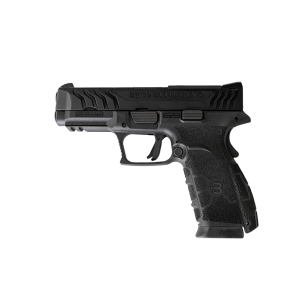
There is always that special moment when you take your gun in hand. The silence of the shooting range, the characteristic smell of gunpowder, the heart beating a little faster. You line up the target in the distance, breathe, and suddenly everything tightens: there's only you, your weapon, and that small black dot you need to hit.
But behind this gesture that seems so simple, there is actually a precise mechanism, almost a choreography. Shooting a pistol is not just pulling a trigger: it is a combination of skills, details repeated over and over, that make the difference between a missed shot and a perfectly centered one.
This is what I'm going to share with you today: the 7 skills of pistol shooting, the foundations upon which all serious progress is based.
1. Safety first
The first skill, and probably the most important, is the mastery of safety rules. They can be summarized into four universal principles:
-
Always consider a weapon as responsible.
-
Never point the barrel at something you do not want to destroy.
-
Keep the index out of the relaxation as long as one is not ready to shoot.
-
Clearly identify your target and environment.
Without this discipline, the rest makes no sense. An experienced shooter is recognized by the way they handle their weapon, even off the shooting range.
2. The grip
One precise shot start with a firm and steady grip. . The flu It must stabilize the weapon, reduce muzzle rise (the "perceived recoil"), and allow for a quick return to the target. Both hands work together: the strong hand controls the trigger, while the support hand provides stability and absorbs recoil.
A poor grip, either too weak or asymmetrical, systematically leads to deviations on the target.
3. The position of the body
The body is the platform for the shot. A good firing position combine balance, stability, and comfort.
-
Feet slightly apart (shoulder width apart).
-
The weight of the body slightly forward, never backward.
-
The shoulders relaxed but engaged.
A well-grounded posture allows for better handling of recoil and helps avoid muscle fatigue, especially during long sessions.
4. The alignment of the sighting devices
The eye must naturally find the alignment. elevation / handlebar / target. The rule is clear: priority is given to handlebar. A shooter who focuses their attention on the front sight, with a clear sight picture, will shoot more accurately than a shooter who concentrates on the target.
This alignment must become automatic through repetition.
5. The aim and management of the focal point
Beyond alignment, the aim requires patience and consistency. We often talk about "holding your aim": keeping the front sight stable within the rear sight notch, despite the body's natural micro-movements.
This is where breathing plays a key role: a controlled inhale, a short pause, then the release of the shot when the aim is the most stable.
6. The release of relaxation
This is probably the most delicate step. A good release of relaxation consists of progressively squeezing the trigger smoothly, without jerking, to avoid deviating the barrel. The pressure should be steady until the shot is fired, almost like a surprise.
A pulled shot (too much pressure) immediately results in a shot outside the ten.
7. Follow-through
Many beginner shooters think that a shot ends when the trigger is pulled. In reality, the firing tracking is essential:
-
Keep your eyes on the handlebars after the shot is fired.
-
Maintain the grip and position until you return to the line of sight.
-
Reposition the aim as if a second shot were about to be fired.
This work ensures better consistency and effectively prepares for the next move.
Conclusion
The 7 skills of pistol shooting — safety, handling, positioning, alignment, aiming, release, and follow-through — form an inseparable whole. Each point requires time, repetition, and genuine attention to detail.
As with any precision sport, progress comes with patience and rigor. But one thing is certain: a shooter who masters these fundamentals will not only be able to shoot better, but above all, shoot safely and with enjoyment.
Products mentioned in this post