




The challenges of fire in the rain
Rain poses several problems:
-
Drenched wood : difficult to ignite, it often releases smoke and little heat.
-
Lack of oxygen : the ambient humidity prevents proper air circulation.
-
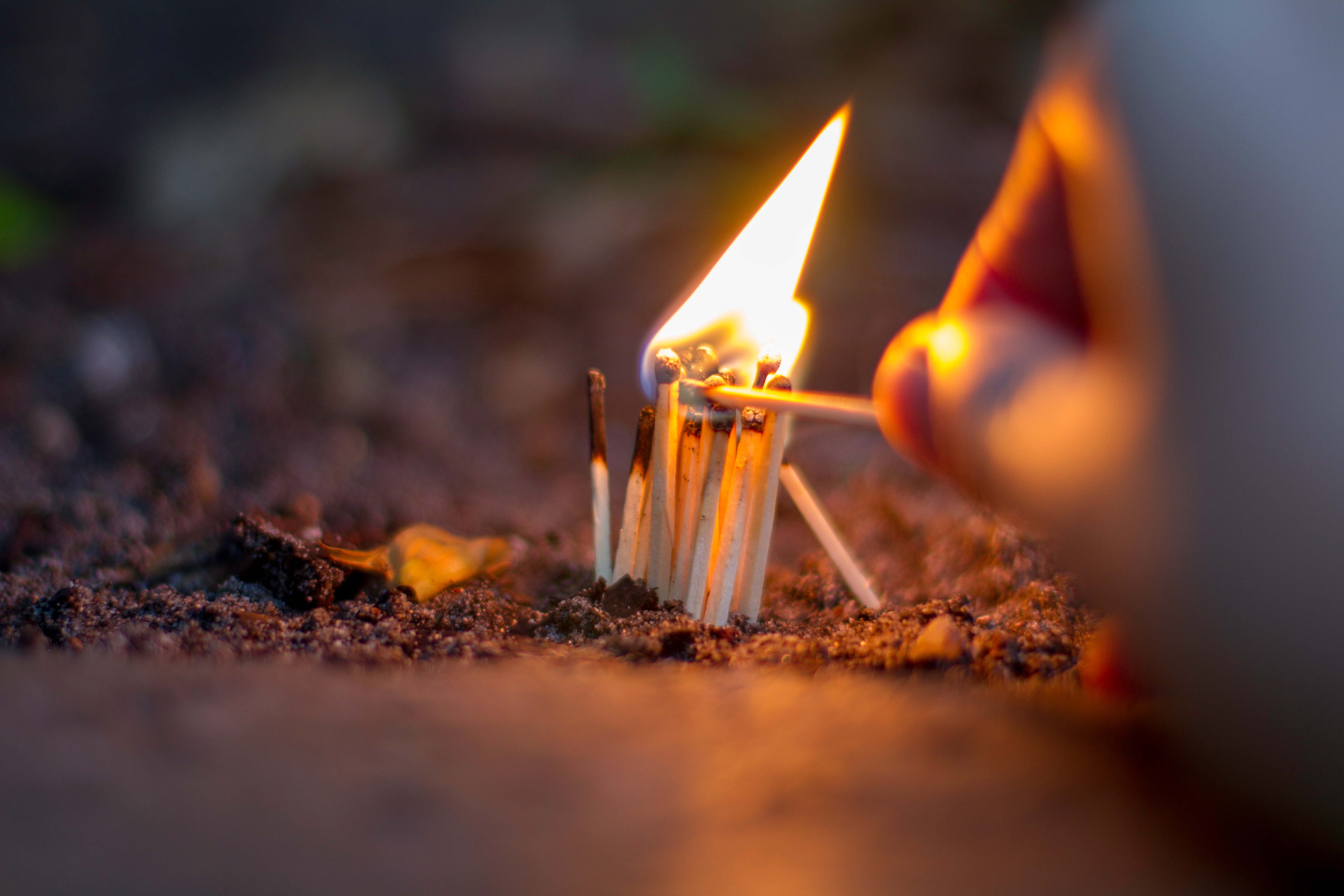
Difficult ignition : lighters, matches, or traditional fire starters can be ineffective if they are not protected.
The golden rules for successfully making a wet fire
1. Choose the right location
-
Find a natural shelter : under a large leafy tree, a rocky overhang, or make a small roof with a tarp or a poncho.
-
Elevate your fire to isolate it from the wet ground: use stones, dry wood, or a metal grate if available.
2. Find dry wood in a wet environment
-
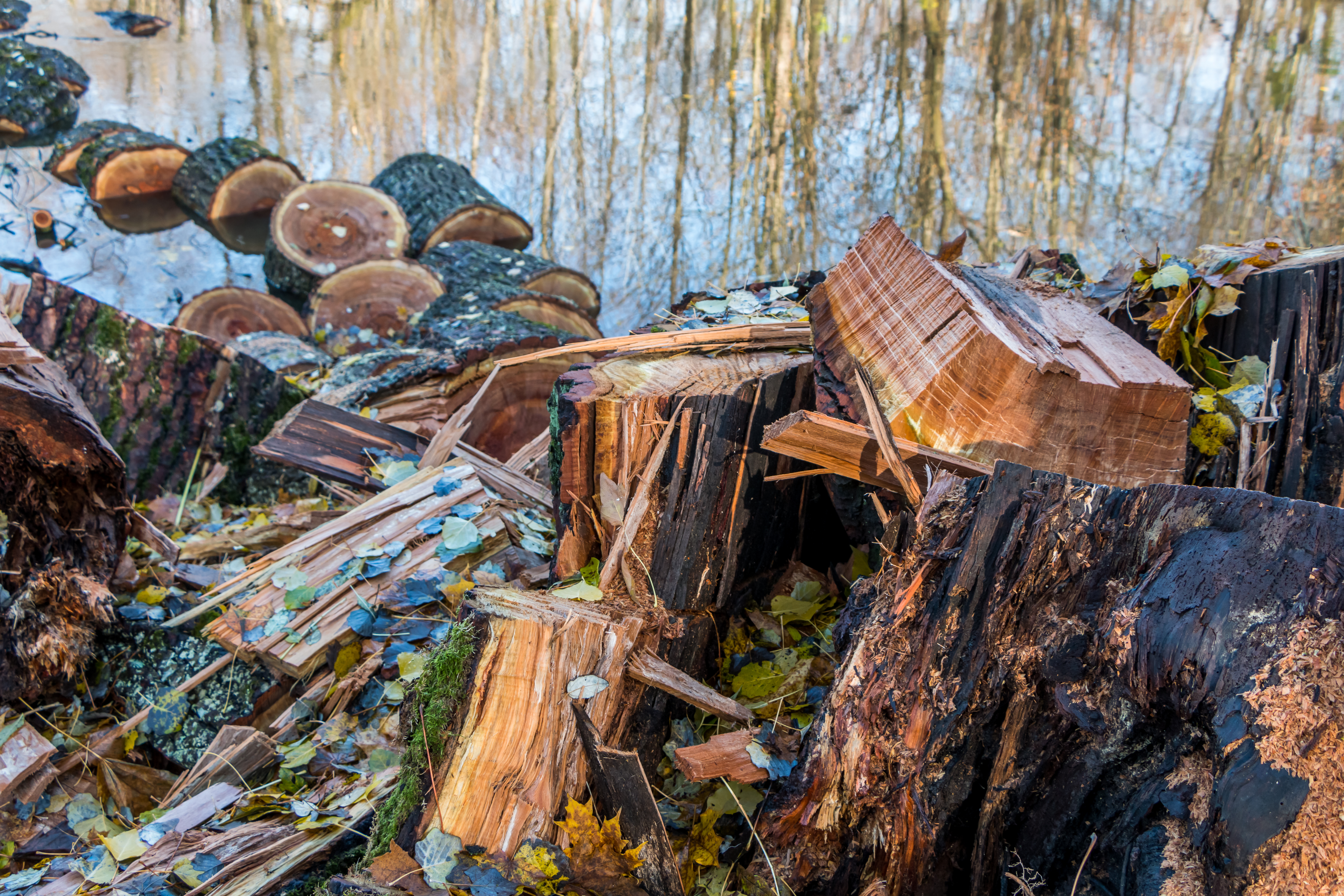
Look inside the dead trunks or under the thick bark: the heart of the wood is often still dry.
-
The low branches conifers or the small branches under shelter are good candidates.
-
If you have a knife or an axe, split logs to reach the dry wood inside.
3. Prepare the fire starter
A good fire starts with a good fire starter. Here are some effective solutions for wet weather:
-
Cotton soaked in petroleum jelly : light, compact, and burns for a long time even in the rain.
-
Birch bark : very flammable, even when wet.
-
Pine gum (resin) : an excellent natural fuel.
-
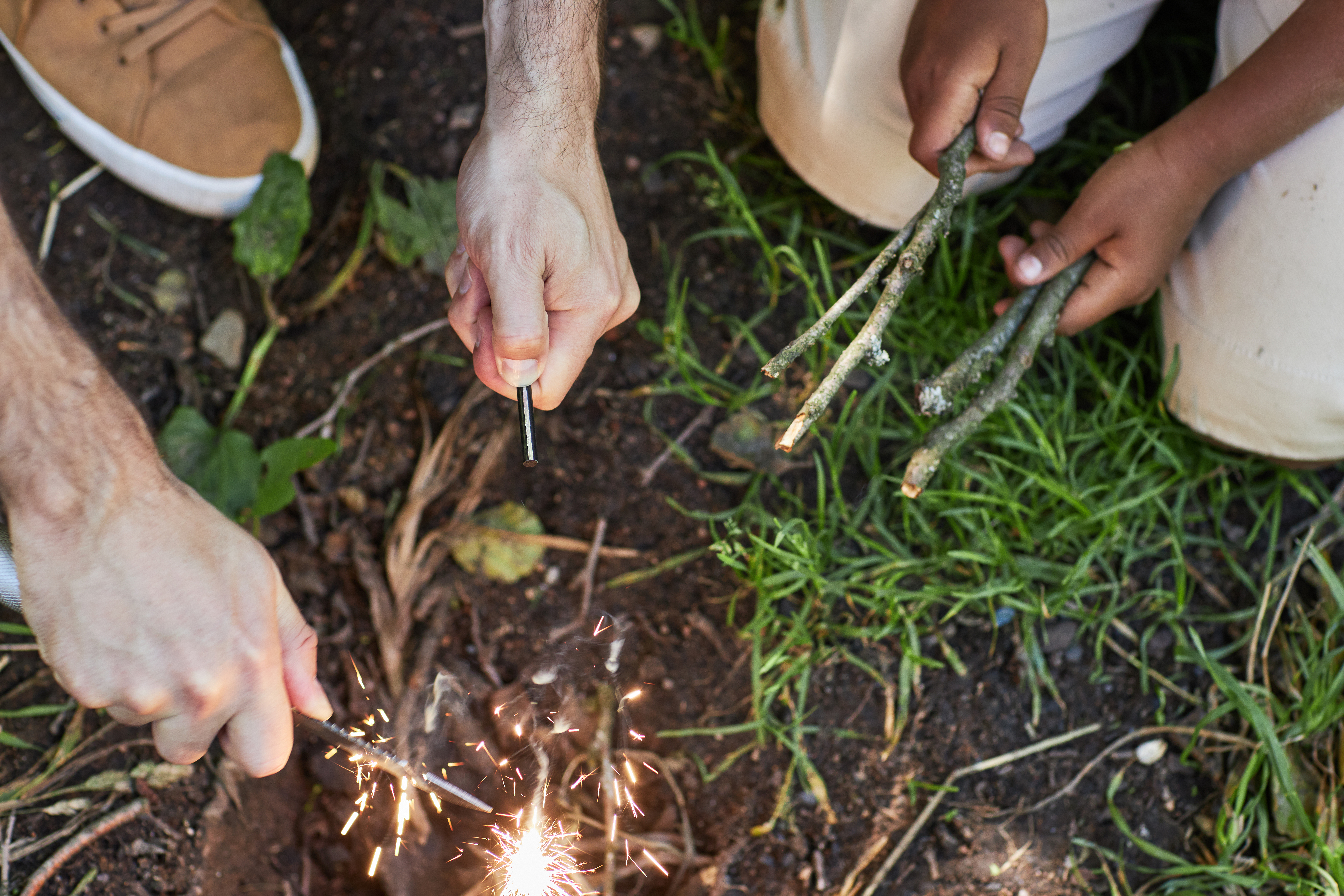
Fire starters or storm lightersIf you are well equipped.
4. Build a smart fire
The structure of the fire is crucial in the rain:
-
Start with a bed of dry wood or bark to isolate from wet ground.
-
Place the kindling in the center, surround it with small dry woods, then from bigger pieces once the flame is well lit.
-
A shape in Tipi (cone) or in cabin allows for better air circulation and protects the fire starter.
5. Light and maintain the flame
-
Use a storm lighterOr a firesteel (flint) if your matches are unusable.
-
Be patient: gently blow to feed the flame without smothering it.
-
Gradually add larger pieces of wood, allowing the fire to "consume" the pieces at its own pace.
Bonus: special wet fire survival kit
Always have with you in your bag:
-
Vaseline cotton in a watertight box
-
Dry birch bark or resin
-
Small knife or blade for splitting wood
-
Zip plastic bag to protect your fire starters
In summary
Starting a fire in the rain is not impossible:
Preparation, protection and patience are the key words. A good damp fire can warm you up, dry your clothes, cook your meal, and most importantly, lift your spirits in the great outdoors.
So the next time you're in the rain while camping, don't give up: you now know how to make a fire, even when soaked to the bone ! !