




In the event of a natural disaster, health crisis, prolonged power outage, or urgent evacuation, a 72-hour survival bag (also called an evacuation bag or "bug-out bag") can make the difference between safety and panic. Designed to meet your needs for three days, it must be ready at any time, lightweight yet comprehensive, and suited to your environment and your family.
Here is the essential content, category by category, to compose an effective survival bag.
1. The basics: the bag itself
-
Type : sturdy, waterproof backpack with adjustable straps and multiple compartments.
-
Capacity : between 40 and 60 liters.
-
Advantages : durable, comfortable over long distances, discreet.
2. Food and water
Water ?
-
Minimum 3 liters of water per person (1 liter/day).
-
Water bottle or hydration bladder (type CamelBak).
-
Purification tablets (Micropur) or Portable filter (Sawyer Mini, LifeStraw).
-
Collapsible container reserve.
Food ?
-
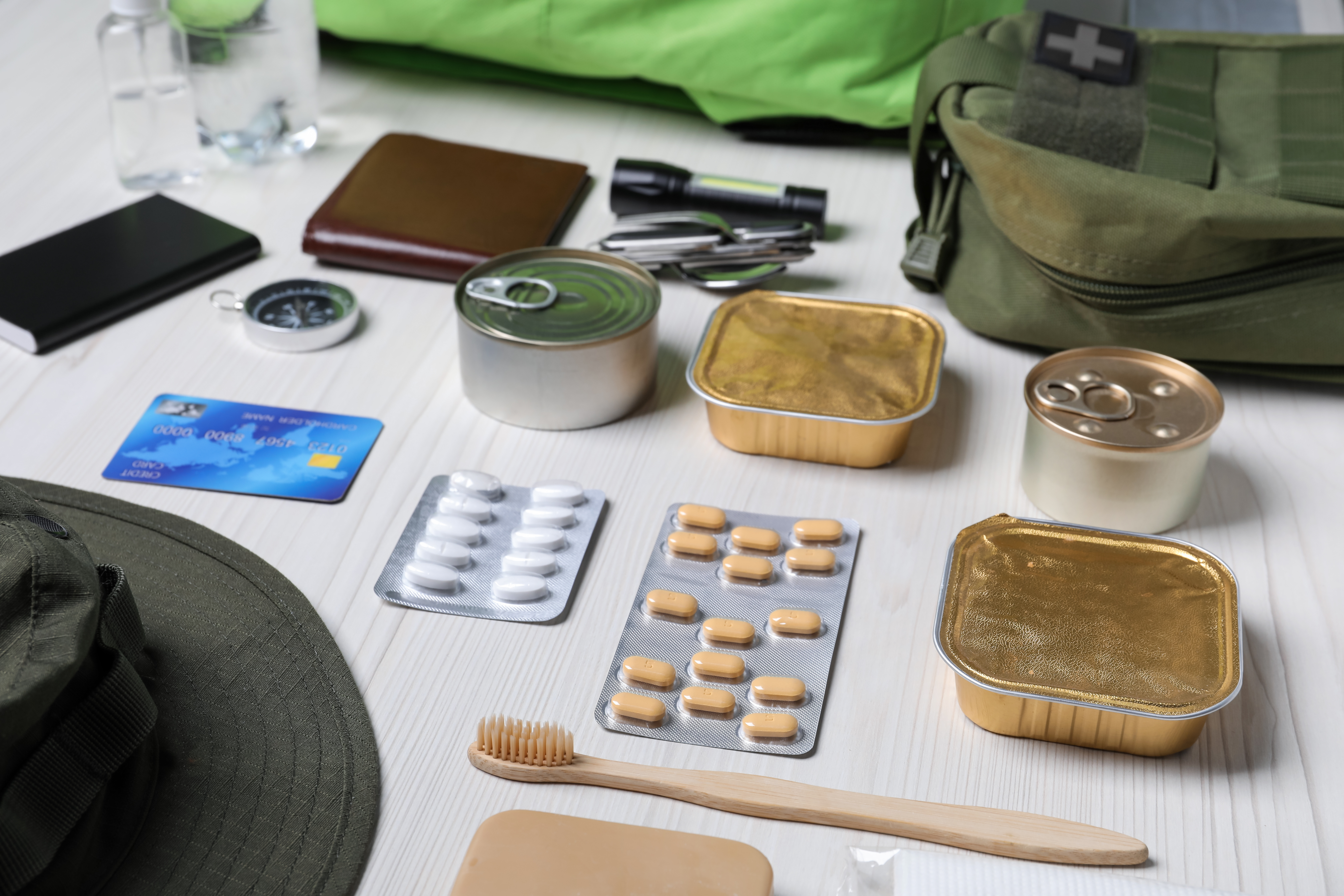
Military rations or Energy bars high caloric density (e.g., NRG-5, Datrex).
-
Freeze-dried meals (with stove).
-
Trail mix (dried fruit/nuts mix).
-
Cutlery, collapsible bowl, small gas or alcohol stove with lighter/fire starter.
3. Heat and shelter
-
Poncho or rain cape.
-
Tarp (light tarp) or ultra-compact tent.
-
Compact sleeping bag or survival blanket (at least 2 per person).
-
Change of clothes : thermal underwear, warm socks, beanie, gloves, fleece sweater.
? ? Royalty-free image of a makeshift shelter
4. Multifunction tools and equipment
-
Knife or multi-tool (Leatherman, Victorinox).
-
Headlamp with spare batteries.
-
Whistle emergency.
-
Cords/paracord (10–15 meters).
-
Adhesive tape (duct tape).
-
Sewing kit basic.
-
Small notebook + pencil/pen.
5. First aid kit
-
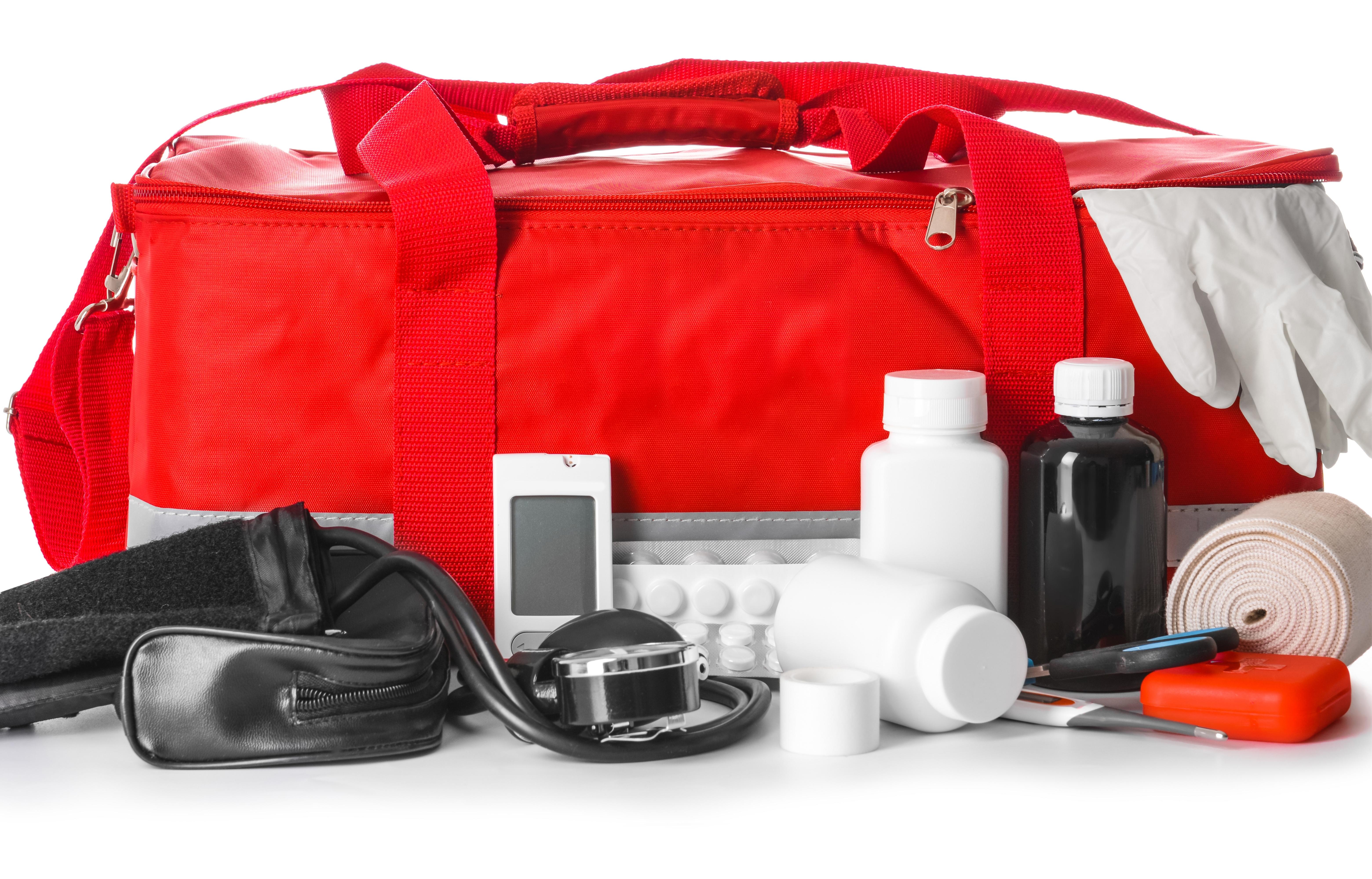
Sterile compresses, dressings, bandages.
-
Disposable gloves, disinfectant, wipes.
-
Antiseptic (type Biseptine).
-
Pain relievers (paracetamol), anti-diarrheal, anti-nausea medications.
-
Personal medication (minimum of 3 days).
-
Tick remover, mini scissors, thermometer.
6. Electronics and communication
-
Emergency basic phone with SIM card.
-
Compatible chargers (Universal USB).
-
Small LED flashlight.
7. Hygiene and comfort
-
Toilet paper or biodegradable wipes.
-
Multi-purpose soap, toothbrush, toothpaste.
-
Hand sanitizer, microfiber towel.
-
Plastic bag or ziplock for waste.
8. Documents and money
-
Photocopies or scans identity documents (paper format or USB key).
-
Emergency contacts notebook.
-
Paper map of the region.
-
A little cash in small denominations.
To be adapted according to your profile
-
Children : infant formula, diapers, security blanket, clothes.
-
Animals : kibble, bowl, leash.
-
Medical conditions : specific medications, prescriptions.
-
Local climate : sunscreen, sunglasses, mosquito net, hand warmers…
In summary: the quick checklist
| Category | Essential elements |
|---|---|
| Food & water | 3 L of water, rations, stove, filter |
| Shelter & clothing | Tarp, cover, warm clothes |
| Tools & fire | Knife, lamp, paracord, lighter |
| Care & hygiene | First aid kit, soap, wipes |
| Communication | Radio, power bank, map, phone |
| Documents & money | Identity, regional card, cash |
| Personal adaptations | Medications, child, animals |
Conclusion
A well-prepared 72-hour survival bag is not a luxury, it is a resilience insurance. The goal is not to live in fear, but to be ready to protect those we love in case of a crisis.
Take the time to test your equipment, of the review every 6 months, and don't forget: the best preparation is also knowing how to to use it.