When one mentions Italy and firearms, one name almost immediately comes to mind: Beretta. However, reducing the Italian culture of sport shooting to a single company would mean missing the essence.
Italy has a particularly rich ecosystem in which the arms industry, clubs, federations, competitions, Olympic disciplines, clay shooting, precision shooting, and dynamic shooting have long intersected.
This diversity largely explains the important place the country still holds today in European sport shooting.
Italy has several distinct national organizations according to the disciplines. Clay pigeon shooting, target shooting, dynamic shooting, and the various competitive practices each have their own frameworks, clubs, and circuits.
But the phenomenon goes much further.
Italy is also home to several manufacturers whose development is closely linked to competition: Beretta, Tanfoglio, Pardini, and Benelli.
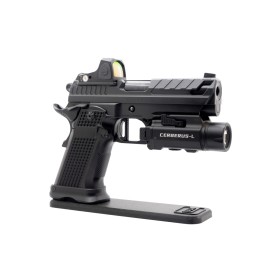
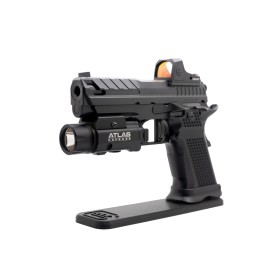
At Tanfoglio, the development of models specifically designed for sport shooting, particularly for IPSC, dates back to the 1980s. Pardini has long maintained an extremely close relationship with top-level competitors, while Benelli develops both firearms intended for clay target shooting and platforms oriented towards dynamic shooting.
What makes Italy interesting is therefore not only its history.
It is the continuity between tradition, industry, and modern competition.
To understand how this country became one of the major European territories for shooting sports, we need to go back several centuries and then see how this industrial heritage still continues to support the sport today.
Gardone Val Trompia: a territory that has become almost inseparable from Italian armory
In northern Italy, in Lombardy, the Gardone Val Trompia valley has a long-standing relationship with metalworking and weapons manufacturing.
Beretta officially places its documented origins in 1526, with a family continuity that has become one of the most emblematic elements of the company's history.
This longevity is obviously exceptional.
But the most interesting thing for understanding the Italian shooting culture is the existence of a real industrial network around this region.
The industry does not rely simply on a large isolated factory.
It is located in a territory that has developed expertise in:
- machining ;
- metallurgy ;
- surface treatment ;
- precision mechanics ;
- manufacturing of components.
This concentration of expertise naturally helps create an environment conducive to the development of sports products.
Beretta represents five centuries of industrial continuity
The number is impressive.
In 2026, Beretta will celebrate five centuries since the documentation of its activity in 1526.
The company continues today to produce weapons intended notably for hunting and sport shooting, while maintaining its historical roots in Gardone Val Trompia.
This continuity gives Italy a rather rare historical depth.
Italian shooters operate in a country where one of the oldest firearms manufacturers in the world is still part of the industrial landscape.
But this story would not have been enough if it had remained frozen.
The strength of the Italian model is precisely that it has evolved the industry alongside sport.
Clay pigeon shooting is one of the great Italian pillars.
If there is one discipline in which Italy has a particularly strong identity, it is clay pigeon shooting.
The country has a long tradition in the disciplines of trap, skeet, Sporting, and Compak Sporting.
The practice is sufficiently structured to regularly produce high-level shooters and to maintain a very active national schedule.
Notably found in this universe are:
- Olympic Pool ;
- Skeet ;
- Sporting ;
- Compak Sporting.
This organization allows for maintaining a network of practitioners ranging from recreational to very high-level.
Why does the plateau hold such a special place in Italy ?
Part of the answer is once again found in the industry.
Italian manufacturers have long developed specialized shotguns intended for clay target disciplines.
Competition then becomes a remarkable laboratory.
The requirements are extremely high:
- Balance ;
- rise time ;
- shooting behavior ;
- resistance to a considerable number of cartridges ;
- regularity.
A competition rifle is not simply a hunting rifle with a more elegant finish.
It must meet specific sports-related requirements.
The existence of a strong community of shooters therefore allows Italian manufacturers to develop products directly in contact with their users.
Beretta and sport shooting have a long-standing relationship.
Beretta does not just make weapons.
The company has long had a strong presence in the world of competition.
His sports universe includes platforms designed specifically for the shooting range, precision, and various shooting practices.
This separation is important because it shows that sport is not treated as a mere extension of the hunting market.
He has his own needs.
In sport shooting, a few details can make a significant difference:
- stick geometry ;
- Balance ;
- relaxation ;
- weight ;
- management of recoil.
Competition therefore pushes manufacturers to refine their products.
Italy is not just about plateau rifles.
The sport pistol also holds a major place.
It is particularly visible in two very different worlds:
- precision disciplines ;
- dynamic shooting.
In the first, Pardini is one of the most interesting examples.
In the second, Tanfoglio has built an extremely strong international reputation.
Pardini: Olympic precision as a philosophy
Pardini Armi represents almost the opposite of a large generalist industry.
The company is known for a production that is highly specialized in precision shooting weapons.
This approach perfectly illustrates one of the Italian strengths: specialization.
A relatively small manufacturer can focus almost entirely on the needs of the sport.
In this type of company, every element is designed around performance:
- ergonomics ;
- relaxation ;
- Balance ;
- settings ;
- movement control.
The result is an extremely direct relationship between competition and design.
Paris 2024 has further increased Pardini's visibility.
Pardini gained significant visibility during the Paris 2024 Olympic Games, notably thanks to the use of its weapons by several medal-winning athletes.
This type of performance shows one important thing.
A national industry can have a global influence without necessarily producing on a very large scale.
The value here comes mainly from technical specialization.
This is a characteristic often found in the Italian industry: companies capable of building an international reputation in an extremely demanding niche.
Dialogue with athletes becomes a true development tool.
Among specialized manufacturers, some models evolve directly based on feedback from high-level shooters.
This process is particularly interesting.
The manufacturer offers a solution.
The competitors are testing it.
They identify:
- defects ;
- limits ;
- needs.
The manufacturer can then adapt the product.
This loop becomes extremely fast when the company operates within the same sports environment.
High-level shooting then functions as a true laboratory.
Tanfoglio perfectly illustrates the other side of Italian sport shooting.
If Pardini immediately evokes static precision, Tanfoglio is strongly associated with dynamic shooting.
The brand began developing models specifically designed for sports disciplines as early as the 1980s, particularly for IPSC.
This choice was particularly important.
IPSC requires very different characteristics from a traditional precision pistol.
The shooter must be able to:
- engage multiple targets ;
- make transitions ;
- to move ;
- manage the speed ;
- maintain accuracy.
The pistol must therefore be optimized for dynamic operation.
Why has Tanfoglio become so closely involved with competition ?
Because competition brings exposure but above all a considerable amount of technical feedback.
Tanfoglio continues today to develop families specially dedicated to sport and competition.
Some models are specifically designed for particular IPSC divisions.
This specialization transforms the weapon into a sporting tool.
The manufacturer is no longer just trying to offer a pistol capable of functioning properly.
He is trying to optimize:
- Balance ;
- commands ;
- relaxation ;
- getting started ;
- dynamic behavior.
Manufacturer teams play a huge role.
Italy has the particularity of having several manufacturers directly involved in sports.
Tanfoglio notably maintains its own racing team.
The phenomenon creates a virtuous circle.
Competitors become ambassadors.
But they also become extremely demanding users.
A shooter capable of firing thousands of rounds in international competitions quickly reveals the weak points of a platform.
The manufacturer therefore benefits from extremely valuable feedback.
Italian dynamic shooting is not limited to the pistol.
The modern development of dynamic shooting also concerns the rifle.
Benelli develops platforms intended for sport shooting and certain dynamic disciplines.
This is particularly interesting because dynamic rifle shooting imposes specific constraints:
- handling speed ;
- ergonomics ;
- food ;
- recoil control ;
- mobility.
Here again, we find the same Italian logic:
to take a sport seriously enough to develop equipment specifically designed for it.
Benelli today has several sporting identities.
Benelli is present in both:
- Sporting ;
- Compak Sporting ;
- English Sporting ;
- dynamic shooting with a rifle.
This diversity shows that the Italian sports market does not operate in completely separate silos.
An industrialist can participate in several disciplines while adapting the products to the requirements of each.
Major competitions strengthen the ecosystem
Italy regularly hosts European and international competitions in various disciplines.
This type of competition produces several effects.
It attracts:
- athletes ;
- coaches ;
- referees ;
- manufacturers ;
- visitors.
But it also creates a showcase for clubs and national infrastructures.
An international event shows that the country does not just produce equipment.
He also has the ability to organize high-level sports.
The network of clubs remains, however, the true foundation.
It would be easy to focus only on the big brands.
That would be a mistake.
Without clubs, no lasting sports culture is possible.
The practitioner usually discovers shooting in a local facility.
There he learns:
- rules ;
- security ;
- technical fundamentals.
Then some gradually move towards competition.
The federal network thus becomes as important as the industry.
Competitive practice is based on activity spread throughout the year, and not just on a few major events.
Target shooting has its own culture.
Alongside clay pigeon shooting, Italy also has a long tradition of precision shooting with pistols and rifles.
This culture is based on:
- clubs ;
- national competitions ;
- international disciplines ;
- training of young people.
The Italian model therefore has an interesting characteristic: several sports cultures coexist.
The precision rifle shooter does not belong to the same technical domain as the Sporting or IPSC practitioner.
Yet, all these practices contribute to the same overall image of sport shooting.
This diversity also protects the culture of shooting.
A single discipline can experience a decline in popularity.
A diverse ecosystem is much more resilient.
In Italy, a practitioner can progress to:
- carbine ;
- pistol ;
- plateau ;
- Sporting ;
- dynamic shooting.
Renewal can therefore come from several directions.
This is probably one of the reasons why Italian sport shooting maintains so much visibility.
The training also helps to maintain the practice.
Italian sports organizations are not limited to organizing rankings.
The training of instructors and the supervision of practitioners also occupy an important place.
This culture of training is essential.
A technical sport needs people capable of properly teaching:
- security ;
- fundamentals ;
- rules ;
- training methods.
The quality of the supervision directly influences the ability to retain new participants.
The Italian industry creates a unique closeness with the equipment.
For an Italian shooter, the great names in firearms are not only foreign brands discovered in magazines.
Some are directly related to the national territory.
This creates a form of cultural familiarity.
Beretta is associated with Gardone Val Trompia.
Tanfoglio also has a strong presence in the north of Italy.
Pardini represents a specialized Italian production.
Benelli remains a major national reference.
This industrial presence naturally makes the equipment more visible in the sporting environment.
A national industry also facilitates technical exchanges.
When a country has manufacturers, distributors, racing teams, and clubs, the flow of information can be particularly efficient.
A problem or a need identified in competition can be reported back to the manufacturer.
The company can develop an evolution.
The shooters then test the solution.
This process partly explains why so many Italian sports products have a very distinctive identity.
They have often been developed directly around a specific discipline.
Mechanical culture is part of the experience.
Another interesting aspect is technical knowledge.
In a country with a strong manufacturing tradition, shooters are naturally exposed to discussions about:
- cannons ;
- relaxations ;
- crosses ;
- treatments ;
- of balance.
This obviously does not mean that every practitioner becomes a gunsmith.
But equipment constitutes an important part of sports culture.
We discuss not only the score but also the tool used to obtain it.
The high level then feeds the mass market.
When a manufacturer develops a technology or ergonomics for a competition platform, certain principles can gradually appear on more accessible models.
Sport then becomes a laboratory of innovation.
It is a well-known phenomenon in many sectors.
Car racing influences the production car.
Professional cycling influences bicycles.
Sport shooting sometimes plays the same role for the armory.
Italy combines craftsmanship and industrial production particularly well.
It is probably one of the most interesting features of its industry.
Some companies produce on a large scale.
Others remain highly specialized.
The two models coexist.
We can therefore find:
- large groups ;
- family structures ;
- specialized manufacturers.
This diversity allows covering several markets without completely losing the culture of the technical product.
The image of "Made in Italy" also works in the armory.
In other sectors, Made in Italy is often associated with:
- design ;
- finition ; = finishing ;
- tradition.
The Italian armory also benefits from this image.
But in sports, aesthetics obviously are not enough.
A product must work.
He must resist.
He must produce results.
It is precisely the combination of design and efficiency that has allowed several Italian manufacturers to become global references.
Italy is still actively involved in the development of dynamic shooting.
The Italian role in dynamic shooting is not only a thing of the past.
The country remains very active in European and international competitions.
The awarding of major future events to Italy confirms that this culture remains extremely vibrant.
This dynamic is important because it shows that Italy does not live solely on its industrial heritage.
She continues to contribute to the modern development of sport shooting.
Why are major events important ?
Because they constitute a huge showcase.
The best shooters in the world gather in the country.
Domestic manufacturers benefit from exceptional visibility.
Clubs and organizations showcase their expertise.
But above all, these competitions can attract the attention of new participants.
Major championships often have this effect.
They transform a specialized discipline into a visible sporting event.
Italian sport shooting ultimately has several faces.
There are almost several Italies of shooting.
Olympic Italy of the plateau.
Italy of the rifle and precision pistol.
The Sporting Italy.
Italy of the IPSC.
The industrial Italy of Brescia.
The artisanal Italy of specialized manufacturers.
These worlds are not identical.
But they feed each other.
That is precisely what makes the ecosystem so interesting.
Italian success therefore does not come from a single manufacturer.
Beretta has immense historical significance.
But it is not enough to explain the whole phenomenon.
Without:
- clubs ;
- federations ;
- competitors ;
- Tanfoglio ;
- Pardini ;
- Benelli ;
The landscape would be very different.
The true strength of the country lies in this accumulation.
Each actor plays a different role.
The result is a particularly dense system.
What can be learned from the Italian model ?
The first lesson is specialization.
The disciplines have very different needs, and the manufacturers have understood this.
The second concerns the link between competition and industry.
The best sports products often emerge when engineers truly listen to the practitioners.
Finally, the existence of clubs and regular schedules remains fundamental.
A country can have the best manufacturers in the world.
Without practitioners, there is no sports culture.
Conclusion
Italy has become one of the great European nations in sport shooting because it possesses something that few countries can bring together with such intensity: a very ancient industrial history and a still extremely vibrant sports culture.
Beretta perfectly symbolizes this continuity. Established in Gardone Val Trompia and documented since 1526, the company is one of the historical pillars of Italian gunsmithing.
But Italian wealth does not stop there.
Tanfoglio has specialized for several decades in competition firearms, particularly IPSC. Pardini has built a worldwide reputation around precision shooting. Benelli today develops both platforms intended for Sporting as well as firearms oriented towards certain dynamic disciplines.
At the same time, clubs, federations, and national calendars maintain a busy sporting activity.
Italy therefore has an almost complete chain:
industry → clubs → training → competitions → high level → innovation.
Each element reinforces the others.
The competitors give visibility to the manufacturers.
Manufacturers are developing more specialized hardware.
The clubs train the practitioners.
Sports organizations manage the progression.
And the major international competitions give the system worldwide exposure.
Italy is therefore not only a historical cradle of armory.
She remains today a living laboratory of shooting sports, capable of making several centuries of industrial tradition coexist with the most modern disciplines.
FAQ
Why is Italy important in sport shooting ? Because it combines a strong industrial tradition, numerous clubs, regular competitions, and manufacturers directly involved in the sport.
Beretta joue un rôle central et emblématique dans l’histoire armurière italienne. Fondée en 1526, la société Beretta est l’une des plus anciennes et des plus prestigieuses manufactures d’armes à feu au monde. Elle est reconnue pour la qualité, la fiabilité et l’innovation de ses armes, notamment ses fusils de chasse, pistolets et carabines.
Beretta a contribué de manière significative au développement de l’industrie armurière en Italie, en établissant des standards élevés en matière de fabrication et de design. La marque est également un symbole du savoir-faire artisanal italien et de l’excellence industrielle. Au fil des siècles, Beretta a su s’adapter aux évolutions technologiques et aux besoins des marchés civils et militaires, devenant un acteur majeur à l’échelle internationale.
En résumé, Beretta incarne l’excellence et la tradition de l’armurerie italienne, avec une influence durable sur l’industrie des armes à feu tant en Italie qu’à l’étranger. ? Beretta has a historical presence in Gardone Val Trompia since the 16th century and remains today a major player in sport shooting and hunting.
Is Italy strong only in trap shooting ? No. She also has extensive experience with pistols, precision rifles, and dynamic shooting.
Why is Tanfoglio so closely associated with IPSC ? Because the brand has been developing pistols specifically designed for dynamic sport shooting for several decades.
Oui, Pardini est un fabricant italien. ? Yes. Pardini is an Italian manufacturer highly specialized in precision shooting firearms.
Is Pardini present at the Olympic level ? Yes. Pardini firearms are regularly used by top-level athletes in precision disciplines.
Oui, Benelli est bien présent dans le tir sportif. La marque italienne est reconnue pour ses fusils de haute qualité, notamment dans les disciplines du tir au pigeon d'argile, du skeet et du trap. Benelli équipe de nombreux tireurs sportifs professionnels et amateurs grâce à ses armes fiables, précises et innovantes. ? Yes. Benelli is strongly present in clay shooting disciplines, Sporting, and certain dynamic rifle shooting practices.
Why does the Italian industry have such a strong influence on sports ? Because several manufacturers work directly with competitors and develop products specifically designed for their disciplines.
Which region is particularly important for Italian armory ? Northern Italy, particularly around Gardone Val Trompia and Brescia, has a long industrial tradition related to armory.
Do Italian manufacturers have racing teams ? Yes. Several brands directly support competitors and sports teams.
Why is Italian sport shooting so diverse ? Because it combines Olympic disciplines, field, precision, and dynamic shooting within the same ecosystem.
What is the main lesson of the Italian model ? The strength comes from the continuity between industry, clubs, training, competition, and innovation.
Does Made in Italy play a role in the image of the armory ? Yes. Tradition, design, craftsmanship, and expertise strongly contribute to the international image of Italian manufacturers.
Why are major competitions important for Italy ? They provide visibility to clubs, athletes, and manufacturers, while also enhancing the appeal of sport shooting.
Can a small company have a global influence in shooting sports ? Yes. Highly specialized manufacturers like Pardini demonstrate that strong expertise can have a considerable international influence.
Is Italian dynamic shooting continuing to develop ? Yes. Italy remains very active in IPSC and in European and international competitions.
Products mentioned in this post