




Whether for long-distance shooting enthusiasts, firearm aficionados, hunters, or military professionals, understanding the ballistics is essential for hitting a target accurately. But how is ballistics actually used to calculate a trajectoryThis article guides you step by step through the basic principles and the modern tools available.
What is ballistics?
The ballistics is the science that studies the motion of projectiles. It is divided into three main categories:
-
Internal ballistics : the behavior of the projectile inside the weapon (pressure, gunpowder combustion, barrel length...).
-
External ballistics : the flight of the projectile after leaving the barrel until impact.
-
Terminal ballistics : the effects of the projectile on the target.
To calculate a trajectory, it is mainly the external ballistics that interests us.
The factors that influence the trajectory of a projectile
Several elements determine the trajectory that a ball or a projectile will follow:
-
Initial speed (muzzle velocity) : the higher it is, the more tense the trajectory is.
-
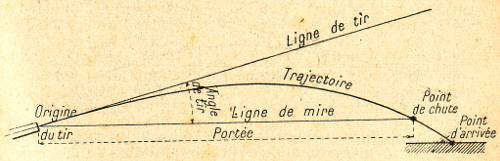
Shooting angle : the inclination of the barrel changes the trajectory of the shot.
-
Weight and shape of the projectile : this influences its air resistance (the ballistic coefficient).
-
Gravity : it constantly pulls the projectile towards the ground, creating a parabolic trajectory.
-
Air resistance (drag) : it slows down the projectile.
-
Weather conditions : wind, temperature, and atmospheric pressure can deflect or slow down the shot.
Tools for calculating a trajectory
1. Ballistic tables
These are tables provided by ammunition manufacturers or available in specialized manuals. They indicate the drop of the projectile (in cm or MOA) at different distances, according to a given ammunition.
2. Ballistics software
Applications like Strelok Pro, , Ballistic AE or Hornady 4DOF allow for very precise simulation of the trajectory of a shot. You just need to enter:
-
The caliber and type of ammunition
-
The initial speed
-
The ballistic coefficient
-
The targeted distance
-
Weather conditions
These software programs calculate the fall, the wind drift, thecorrection angle, etc.
3. Portable rangefinders and weather stations
For greater accuracy, some shooters use laser rangefinders and weather stations such as the Kestrel. These tools measure the exact distance and climatic data, automatically integrated into the ballistic application.
Simple example: calculate the fall of a ball from 300 m
Let's imagine a .308 Winchester caliber projectile with an initial velocity of 820 m/s and a ballistic coefficient of 0.47. By entering these data into a software, we can know that at 300 meters:
-
The ball will have fallen by approximately 40 cm (or 1.5 MOA).
-
With a lateral wind of 10 km/h, it will drift by approximately 12 cm.
Thanks to this data, the shooter will be able to adjust their scope to compensate for drop and drift.
The ballistics is an accessible science, especially with modern tools. Understanding it well allows you to significantly increase the accuracy of your shots. Whether you are a sports shooter, a hunter, or simply curious, learning to calculate a trajectory gives you a clear advantage on the field.
Integrate ballistic calculations into a real shooting session
Calculating is good, but applying it in the field is better. Here's how to proceed to shoot effectively with precision:
1. Prepare your shot before going to the range or the field
-
Choose your ammunition : caliber, type of bullet, manufacturer.
-
Note the characteristics : initial velocity, ballistic coefficient (BC), mass.
-
Calculate the firing table using ballistic software according to the distances you plan (100 m, 200 m, 300 m, etc.).
-
Prepare a DOPE card (Data On Previous Engagements): a paper chart or app with corrections to apply based on distance and wind.
2. On the ground: check the actual conditions
-
Use a laser rangefinder to know the exact distance to your target.
-
Measure the weather conditions : temperature, pressure, wind (speed and direction). A tool like a Kestrel or a precise weather app is useful.
-
Enter or adjust the data in your ballistics app. : it will recalculate the corrections in real-time.
3. Adjust the rifle scope
-
Set your zero at the desired distance (often 100 m).
-
Apply the corrections of elevation and windage with the turrets or by estimation using the reticles in MIL or MOA.
-
Check the clicks : 1 click = 0.1 MIL or ¼ MOA depending on the scope. At 100 m, 1 click = 1 cm (MIL) or about 0.7 cm (¼ MOA).
Training effectively with a rifle scope
A good telescope is nothing without good practice. Here are the key steps to progress:
1. Mastering the basics
-
Learn to read your reticle (MIL, MOA, hash marks…).
-
Understand the settings for parallax, zoom, and reticle brightness.
-
Practice making your corrections quickly.
2. Shooting at different distances
-
Shoot at 100 m, then gradually increase the distance (200, 300, 500 m...).
-
Systematically record your impacts and adjust according to the software data.
-
Try smaller targets to refine your accuracy.
3. Working with the wind
-
Place flags or observe the vegetation to read the wind.
-
Practice estimating drift and applying lateral correction.
-
Simulate different winds with your app to learn how to anticipate.
4. Repetition and memorization
-
Memorize the most frequent corrections at your usual shooting distances.
-
Create a custom DOPE notebook or card.
-
Practice estimating distances quickly by eye or with the reticle.
5. Dry run and software
-
Use shooting simulation apps (e.g., Ballistic-X, Shooter).
-
Practice at home by reading a target, calculating a correction, and simulating the clicks.
In summary
A precise shot is not just luck. It is a combination of science (ballistics), technique (scope adjustment), and practice (regular training).
By incorporating your ballistic calculations into your shooting sessions, you will gain consistency, confidence, and efficiency.