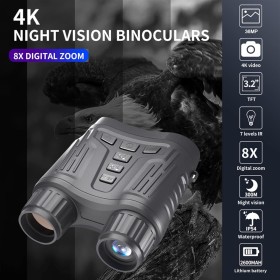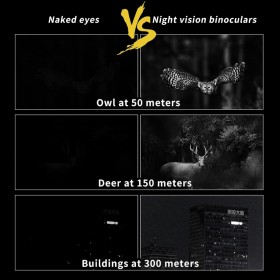

When a hunter prepares their equipment, the focus is often primarily on the weapon, the ammunition, or even the...mounted optics on the rifle.
However, an essential element is regularly underestimated: the binoculars or twins (depending on context).
Whether it is stalking, ambush, or even certain situations in beaten, The ability to effectively observe one's environment directly determines the quality of an outcome.
Many experienced hunters even consider that an excellent pair of binoculars influences their overall effectiveness more than a change of weapon or caliber.
Understanding the real importance of this equipment helps to avoid common mistakes and to invest more wisely.
Observing remains the first step of any action.
Before making any decision, the hunter must observe.
This observation allows:
- to identify the game ;
- ofEvaluate the distance ; ;
- to analyze animal behavior ;
- to anticipate a trip ;
- to secure the environment.
Without quality observation, any decision made afterward becomes less reliable.
Hunting always begins with visual information.
Many invest backwards
It is common to observe unbalanced configurations.
Some hunters invest heavily in:
- one weapon high-end ;
- an expensive optical device ;
- secondary accessories.
But they use entry-level binoculars.
This logic poses a simple problem.
A weapon only comes into play at the final moment.
The binoculars accompany the entire outing.
The actual usage time is absolutely not comparable.
Optical quality radically changes the experience
Two twins can have the same specifications on paper and offer a completely different experience.
Several factors come into play:
- quality of the glass ;
- multilayer treatments ;
- light transmission ;
- peripheral sharpness ;
- faithfulness of contrasts.
A better lens allows for detecting more details and significantly reduces eye strain.
Low light conditions
A large part of the observations are carried out:
- early in the morning ;
- at the end of the day ;
- under forest cover ;
- in low-light environments.
It is precisely under these conditions that the differences between the models become very visible.
Poor light transmission greatly reduces the observation capability.
The hunter then loses valuable information.
Visual fatigue influences decisions
A hunting trip can last several hours.
A poor lens often causes:
- eye strain ;
- decrease in concentration ;
- difficulty maintaining prolonged observation ;
- general discomfort.
In the long term, this directly influences the quality of decisions made on the ground.
Visual comfort is a largely underestimated criterion.
Magnification: a common mistake
Many believe that a high magnification automatically constitutes an advantage.
In reality, excessive magnification often leads to:
- a reduced field of vision ;
- more shaking ;
- a slower acquisition ;
- a loss of versatility.
The balance between magnification and comfort remains much more important than a high value alone.
The role of stalking hunting
In stalking hunting, binoculars often become the main equipment.
The hunter spends most of his time:
- scan his/her environment ;
- identify an animal ;
- Study the movements ;
- anticipate an approach angle.
The weapon is used only for an extremely short duration.
The quality of observation therefore determines the entire strategy.
The hunt does not exclude their importance.
Even in a battue, many underestimate their value.
The binoculars or twins (depending on context) allow notably:
- to observe a distant area ;
- to identify a movement ;
- to analyze the environment before any action.
In certain contexts, they provide a better overall reading of the terrain.
Weight and ergonomics matter a lot.
Binoculars that are too heavy quickly become tiresome.
Several criteria influence comfort:
- weight ;
- getting started ;
- coating ;
- General equilibrium ;
- accessibility of settings.
An excellent theoretical model becomes useless if it remains uncomfortable after several hours.
Resistance and durability
Binoculars often accompany the hunter in difficult conditions:
- rain ;
- humidity ;
- dust ;
- shocks ;
- variable temperatures.
Good equipment must offer:
- Sealing ;
- mechanical robustness ;
- lens protection ;
- stability of settings.
Sustainability is becoming a central criterion.
Why do experienced hunters often invest more in observation optics?
With experience, many come to realize an obvious truth.
They pass:
- several hours observing ;
- a few seconds to shoot.
This simple reality often changes the way they invest.
Observation gradually becomes a priority.
The most common mistakes
We regularly find:
- purchase based solely on magnification ;
- choice of a model that is too heavy ;
- neglect of the actual optical quality ;
- Excessive investment in weaponry to the detriment of observation.
These errors often limit overall effectiveness.
A logic often forgotten
In hunting, making a good decision depends first on the quality of the information available.
Better observation allows:
- to better understand ;
- to better anticipate ;
- to avoid certain mistakes.
The binoculars therefore play a much more strategic role than one might imagine.
Conclusion
The weapon obviously constitutes a central element of the practice.
But in the majority of situations, the quality of observation greatly influences the actual course of an outing.
The binoculars accompany every moment:
- search ;
- identification ;
- analysis ;
- anticipation.
Many hunters invest heavily in their weapon, while their overall effectiveness would improve more with better observation optics.
In hunting, the quality of a decision almost always begins with the quality of the observation of the terrain.
Products mentioned in this post