
When venturing into the wilderness, accessing potable water can become a real challenge. Whether it's for a hike, camping, or a self-sufficient expedition, drinking untreated water can lead to serious illnesses such as giardiasis, dysentery, or other gastrointestinal infections. Fortunately, several simple and effective methods can make water safer to consume. Here is an overview of techniques to filter or purify water in the wild.
1. Understanding the Dangers of Natural Water
Water found in rivers, lakes, or springs may contain:
-
Pathogenic microorganisms: bacteria (E. coli), viruses, protozoa (Giardia, Cryptosporidium).
-
Suspended particles: sand, clay, plant debris.
-
Chemical contaminants (rare in the wilderness, except for industrial or agricultural pollution).
Drinking water without proper treatment, even if it seems clear, can be risky.
2. Different Purification Methods
Boiling Water
Effectiveness: kills bacteria, viruses, protozoa.
How to do it: bring the water to a boil for at least 1 minute (3 minutes above 2,000 meters altitude).
Advantages: very reliable.
Disadvantages: requires a stove or fire, consumes fuel.
Disinfectant Tablets or Drops (chlorine, chlorine dioxide)
Effectiveness: very broad spectrum, including against Giardia (depending on the product).
Usage: follow instructions (waiting time from 30 min to 4 h depending on water temperature).
Advantages: lightweight, easy to carry.
Disadvantages: unpleasant taste, waiting time, reduced effectiveness in cloudy water.
Portable Water Filters
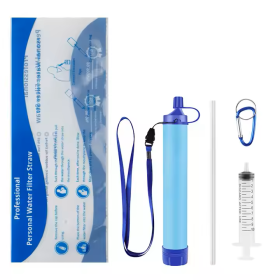
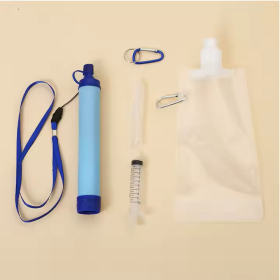
Types: pump filters, filtering straws (like LifeStraw), filtering bottles.
Filtration: removes particles and most bacteria and protozoa (not viruses except specific models).
Advantages: fast, no chemicals.
Disadvantages: requires maintenance, can freeze in winter.
The SODIS Method (solar disinfection)
Principle: expose a PET bottle filled with clear water to the sun for 6 hours (or 2 days if cloudy).
Effectiveness: kills most pathogens.
Advantages: eco-friendly, free.
Disadvantages: depends on the sun, ineffective if the water is cloudy.
Improvised Natural Filtration
In case of emergency, one can make a rudimentary filter with:
-
sand, charcoal, gravel, cloth, or fabric.
-
This system clarifies the water but does not purify: the water must then be boiled or chemically disinfected.
3. Some Practical Tips
-
Always pre-filter cloudy water (with a cloth or improvised coffee filter).
-
Never drink directly from a river, even if it seems clean.
-
Carry multiple treatment options, in case of failure or loss.
-
Plan for a clean container to store purified water.
Conclusion
Filtering or purifying water in the wild is an essential skill for any adventure or survival enthusiast. There is no universal method, but good preparation and knowledge of several techniques will allow you to stay safe, even far from any potable water source. In the wilderness, water can be abundant... but rarely harmless!
Products mentioned in this post